Another of my articles on spirituality has been published in the 'Faith' section of the Austin American-Statesman.
Finding inner space for meditation
It will be in the actual print newspaper tomorrow. Yay!
Friday, June 29, 2007


Sunday, June 24, 2007
Lucy in the Sky with Diamonds
This is a piece that I published in my columns but since it has to do with writers (sort of) I clipped it here as well :)

I was in a museum a few days ago, explaining the depiction of the Saints to my boyfriend. He comes from India and does not know much about Christianity. I come from Pat Robertson-brand of fundamentalist born again Christian and do not know much about Catholicism. But we seem to get along somehow, me through my interest in such matters as art and religion, he in being forced to live with me and listen to me talk.
I was in a museum a few days ago, explaining the depiction of the Saints to my boyfriend. He comes from India and does not know much about Christianity. I come from Pat Robertson-brand of fundamentalist born again Christian and do not know much about Catholicism. But we seem to get along somehow, me through my interest in such matters as art and religion, he in being forced to live with me and listen to me talk.
"This is Saint Lucy," I said. "She is always shown holding her eyes on a plate because they tortured her by gouging out her eyes." I tried to explain the others but wasn't familiar with all of them. I knew that Mary Magdalene always held that jar, and Saint Catherine the wheel - though I couldn't remember the story behind it - but the others were more difficult. I always, however, recognized Saint Lucy.
One Christmas, several years ago when I was probably eighteen or nineteen years old, I asked my mother for a book about the Saints. It featured paintings of them along with their stories. She bought it for me, and I would gaze at those beautiful works of art whenever I had a chance. It was there that I learned about Saint Lucy, and why her eyes were like that.
When I went to Italy, I saw her around quite a bit, looking at me from the eyes in her head and the eyes on her plate.
And a few days ago, when I asked my close friend - a priest-to-be - who the patron saint of writers was, he told me that it was, in fact, Saint Lucy.
Could she be my patron saint too? Why does she keep resurfacing?
This is her story:
She was from Sicily (which, interestingly enough, is where some of my forbears hailed from), the daughter of nobility, born around 283 A.D. Her father died and her mother wasn't much interested in Lucy's ideas about spreading their wealth to the poor. That is, until Lucy's prayers at the shrine of St. Agatha healed her mother of illness.
Lucy dedicated her virginity to God, which did not please her betrothed, a man who was probably smarting from the loss of such a financially blessed wife. He denounced her to the governor of Sicily, and she was supposed to be forced to endure prostitution and shame, but God apparently made her immovable so that they could not bring her to the appointed place. She was strapped to bundles of wood and set on fire, but God saved her once again. Finally, they gouged out her eyes and killed her with a sword.
Lucy is also the patron saint of the blind.
So I wonder what the symbolism is here. Why is the patron saint of the blind, a woman whose eyes were ripped out, also the patron saint of writers? Could it be that writers do not only see with the physical eyes into the physical world, but deeper and clearer into the soul?
Wednesday, June 20, 2007
Baby Steps
Web 2.0 is a great thing for writers. To be able to publish your work on the Web without worrying about whether or not an editor will like it ... just writing what you want and feel, knowing you will have an audience. It's beautiful.
I have always wanted to write a memoir, but when I sat down to do it, it just didn't work. How do you go about such a monumental piece of work? Start from birth and end with today? It's daunting.
Then, through my Gather and Newsvine columns, I started writing short personal narratives. Bite-sized memoir. Manageable and meaningful. And I realized that I can continue to tell the small, different stories of my life through articles, and then integrate them into a full-length memoir later. This has really helped me dive into the writing, uninhibited.
I would advise you to do the same if you have a hard time cranking out that novel. Write short stories that each feature your character, just write one scene at a time. It's a great way to overcome writer's block. You don't need to know what will happen, beginning to end, but just what will happen in this particular story.
I have always wanted to write a memoir, but when I sat down to do it, it just didn't work. How do you go about such a monumental piece of work? Start from birth and end with today? It's daunting.
Then, through my Gather and Newsvine columns, I started writing short personal narratives. Bite-sized memoir. Manageable and meaningful. And I realized that I can continue to tell the small, different stories of my life through articles, and then integrate them into a full-length memoir later. This has really helped me dive into the writing, uninhibited.
I would advise you to do the same if you have a hard time cranking out that novel. Write short stories that each feature your character, just write one scene at a time. It's a great way to overcome writer's block. You don't need to know what will happen, beginning to end, but just what will happen in this particular story.
Monday, June 18, 2007
"I had some notion of wanting to write, though little inclination to actually write, which sometimes led me to believe that I should develop other notions. An obscure literary journal had just published a five-thousand-word essay I had written, and while I was pleased to have something published, the $50 and two free issues in compensation for three months of evening work seemed, somehow, inadequate. I kept sending essay, trifles, queries to national magazines, and while the editors would respond with a kind, encouraging note, even a phone call, they still, sadly, continued to publish the petty ruminations of windbags long past their prime instead of fresh new voices with interesting things to say. (Not that I'm bitter.)"
J. Maarten Troost, The Sex Lives of Cannibals
Tuesday, June 12, 2007
Criticism
How does a writer deal with criticism? I have often thought about this, as I am a writer who is extremely sensitive and who sometimes believes I shouldn't be a writer at all! Yesterday, when someone used the word "terrible" to describe the conclusion to an article I wrote, I was dumbfounded. I mean, that is not exactly "constructive," is it? But then, when you call yourself an artist, you literally put your creations out into the view of all people, to judge as they see fit. If they think it's crap, they're going to tell you, and you have to believe in yourself and your work enough to withstand it.
I guess there are two types of criticism:
* Constructive criticism - This comes in the form of, "I think you could have done this better" and "I wouldn't use this phrase; it's too wordy." Your critic is not only finding faults, but offering solutions. This is, ultimately, to help you improve. Sometimes it can hurt, but not nearly as much as the second type of criticism, which is:
* Unnecessary criticism, or as I like to call it, criticizing for the sake of criticizing - We've all heard the exasperated saying, "Everyone's a critic." Actual professional critics have often been criticized themselves, because artists resent them. They do not create, we say, only pick at what others have worked hard to create. This is both fair and unfair to a certain extent, depending on the critic.
When a person says that a painting, novel or film is "terrible" or "boring" or "dry," perhaps they are simply being honest. However, a person's blood, sweat and tears went into such works, and unless said critic offers something constructive, this type of criticism is hurtful, self-indulging and utterly useless to the artist.
What are your thoughts on the matter?
I guess there are two types of criticism:
* Constructive criticism - This comes in the form of, "I think you could have done this better" and "I wouldn't use this phrase; it's too wordy." Your critic is not only finding faults, but offering solutions. This is, ultimately, to help you improve. Sometimes it can hurt, but not nearly as much as the second type of criticism, which is:
* Unnecessary criticism, or as I like to call it, criticizing for the sake of criticizing - We've all heard the exasperated saying, "Everyone's a critic." Actual professional critics have often been criticized themselves, because artists resent them. They do not create, we say, only pick at what others have worked hard to create. This is both fair and unfair to a certain extent, depending on the critic.
When a person says that a painting, novel or film is "terrible" or "boring" or "dry," perhaps they are simply being honest. However, a person's blood, sweat and tears went into such works, and unless said critic offers something constructive, this type of criticism is hurtful, self-indulging and utterly useless to the artist.
What are your thoughts on the matter?
Friday, June 8, 2007
Gather Around
My first article as a member of Gather, entitled "A Story About My Father," has been chosen by the editorial staff to be featured on Gather.com's main site this Sunday, June 10, between 8:00 a.m. and 1:00 p.m. Look for it! :)
Wednesday, June 6, 2007
A Ton of GOOD NEWS
Firstly, for those who are interested, here is the link to my story about Austin.
Secondly, I am seriously excited because two authors have granted me interviews. The first is Michael McColly, who is the author of The After-Death Room: Journey into Spiritual Activism, which just won a Lambda Award for Best Spiritual Writing. His interview will be published in Estella's Revenge.
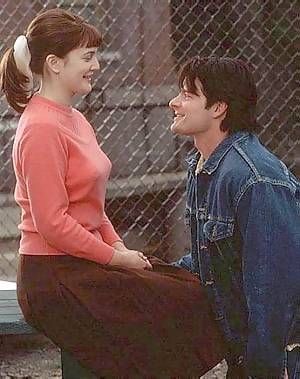 Next, one of my favorite authors in the world, Beverly Donofrio! Some of you may know her from the Drew Barrymore movie that was based on her memoir, Riding in Cars with Boys, or from her other work, Looking for Mary. Either way, she is extremely gifted and funny and wonderful, and she agreed to an interview for Della Donna!
I stand before you a very happy woman :)
Secondly, I am seriously excited because two authors have granted me interviews. The first is Michael McColly, who is the author of The After-Death Room: Journey into Spiritual Activism, which just won a Lambda Award for Best Spiritual Writing. His interview will be published in Estella's Revenge.
Next, one of my favorite authors in the world, Beverly Donofrio! Some of you may know her from the Drew Barrymore movie that was based on her memoir, Riding in Cars with Boys, or from her other work, Looking for Mary. Either way, she is extremely gifted and funny and wonderful, and she agreed to an interview for Della Donna!I stand before you a very happy woman :)
Monday, June 4, 2007
Hello fellow writers! Things are going well. I got a great gig at Gather.com writing entertainment articles twice a month. If you're a member, add me :) Otherwise don't worry, I will mention each time my work goes up there.
In other news, my boyfriend helped me to develop a plan that will allow me to get in some novel writing three times a week. I am not one for budgeting my time but sometimes it's necessary. So hopefully the work will be flowing pretty soon.
New review up at the Feminist Review, and one coming shortly elsewhere... will let you know when it's up.
In other news, my boyfriend helped me to develop a plan that will allow me to get in some novel writing three times a week. I am not one for budgeting my time but sometimes it's necessary. So hopefully the work will be flowing pretty soon.
New review up at the Feminist Review, and one coming shortly elsewhere... will let you know when it's up.
Subscribe to:
Posts (Atom)