Showing posts with label The Sunday Salon. Show all posts

Sunday, August 2, 2009

TSS Week 31

I haven't had much cause to write any Sunday Salon posts because I haven't really completed any books in a while. I'm still reading a handful at one time and that slows things a bit, but I thought that since I haven't blogged in a while, I would write about them all.

I did finish a novel called Inheritance, written by Indira Ganesan. It was about a teenage girl living in India who has an interesting family and history, and she spends the novel trying to both figure it out and learn who she is. It was a good "time-pass," as I've heard people say. I enjoyed it but it did not make any real impression on me.


I am currently reading Les Miserables for the first time via DailyLit. I love it. It is long-winded and there are parts on French history that lose me (I skip over them - shh! Don't tell!) but it is, for the most part, truly touching and beautiful. I have been reading for months and am only about 32% through it, but that's Hugo for you. I'm in no rush.

I also started reading Virginia Woolf's Mrs. Dalloway. I have never read Woolf's fiction before (have read A Room of One's Own and adored it, of course) so it took me a little while to adjust to it, but the writing is fantastic and I'm glad I stuck it out. Again, I am only about 25-40% through it but it is going well.

Finally, I recently started The Slave by Isaac Bashevis Singer. It is a pretty dark tale but very interesting. Singer tells his story of Jacob, a Jewish man who survives the Chmielnicki massacre, in a folk tale sort of way. The predominant faith represented is Judaism, but there is also a lot of superstition and pagan ritual weaved throughout. I will keep you posted.

Sunday, July 5, 2009

TSS Week 30

A good friend and colleague lent me The House of the Spirits weeks ago because we like to discuss books together and she thought I would like it. I was eager to read it because I have heard such great things about Isabel Allende's work but had never read any. I finished the novel yesterday and I am so glad that I read it.

The House of the Spirits is about a Chilean family's trials and triumphs. Allende is all about the details and small nuances of her characters which, while it annoys me in some other authors, is endearing and captivating in her work. I constantly looked forward to returning to the novel when I had a few spare minutes to read. I got lost in it.

The family encounters great suffering as their country undergoes extreme change (the coup d’etat of 1973), which each character seems to contribute to in his/her own way. This novel is often cited as an example of magic realism, which is a fantastic element that really adds to its appeal for me.

Sunday, April 26, 2009

TSS Week 29


After These Things is an excellent sequel to Only Human, Diski's novel about the biblical Abraham and Sarah. After These Things picks up with Isaac, their son, and his children and grandchildren. If you are familiar with the Bible, you know about Isaac and Rebekah, their twins, Jacob and Esau, and Jacob's adventures with wives Leah and Rachel. If not... it's pretty interesting reading.

It was done extremely well, just like the first novel, though at first I had a hard time latching on because I didn't like Isaac and Rebekah the way I liked Abraham and Sarah. Jacob didn't do much for me either, though of course I fell in love with the maltreated Leah, because what women without extreme coquettishness and beauty does not relate to Leah? The Bible says even God had pity on her.

I also liked that God was not a character in this novel. He was in the previous one, and he was anthropomorphic enough to be annoying. Although Diski introduced "the Editor" as narrator (which was an interesting contrivance), this character didn't do much for me and ultimately became a distraction.

Sunday, April 19, 2009

TSS Week 28


I am still reading After These Things and I am enjoying it, but I do skip around a lot (in terms of books) so today I will talk a bit about the other ones I've started.

1. Twilight


People have been at me to read this series for ages. Everyone raves, regardless of age. I decided to bite the bullet when my colleagues started raving as well. I am sure I will like it because for all my literary pretense, I do enjoy pop lit (e.g. Harry Potter, The Da Vinci Code). Only about 25 pages in but it is good. I have seen the movie so no surprises in the book so far.

2. The Writer's Journey: Mythic Structure for Writers


I was looking for guidance on how to structure my novel and I asked for advice from my local writing group, the Austin WriterGrrls. One person who responded recommended this book, and I just started working on it. It is fabulous! The author, Christopher Vogler, brings together Jungian psychology and the work of Joseph Campbell to isolate a story-telling pattern that has been around since the days of early myth and prevails, even now, in popular novels and films. It has served as a great guide for me and I feel it would resonate with anyone who is a consumer of pop culture. Still in the early stages, though, so we shall see!

3. Les Miserables


I have been reading this novel for a while now, but I recently let it go for a bit because I was frustrated with a lot of sections on French history that were hard to follow. I wonder if Hugo did not envision his novel as being a classic worldwide? Did he expect only his countrymen and women to read it, or was he trying to educate the rest of us? I have come to a point where I skip or skim the parts that are not relevant to the plot, so it is going well once again. Terribly interesting story, from what I can remember of the film.

Please note that I am not complaining about sections on Napoleon or the French Revolution, only the stories about mayors and small-time scandals. It doesn't interest me enough to do the work to look it all up, and from what I can see, it is not essential to the story.

Sunday, April 5, 2009

TSS Week 27

Goodreads now has a way to blog your book reviews with a simple HTML code plugin. That is kind of cool. I might start doing that :) Here is the latest one:

The White Tiger The White Tiger by Aravind Adiga

My review

rating: 2 of 5 stars

The New Yorker said that this novel depicts an India that is "like the Wild West on acid." I didn't get that at all. Honestly, I enjoyed the story and felt compassion for some of the characters, but I didn't enjoy this novel like I expected to. I am weary of all of the Indian literature out there that focuses exclusively on corruption and poverty, as if there is nothing else that India has to offer. I have read many Indian bestsellers and I would like to see the beauty of India for once. We have corruption in the United States too, but it is not what every American novel focuses on. Is there only a Western market for Indian tragedy?

I may need to move out of the realm of what is popular in order to find this. Suggestions are welcome!

I also started reading After These Things by Jenny Diski. I was pleasantly surprised to find it in the library one day, having read and enjoyed Only Human a while back. Only Human was a novel about the biblical Abraham and Sarah, and After These Things is a sequel of sorts, focusing on Isaac, their son, his wife, Rebekah and their twin sons, Jacob and Esau. If you are familiar with the Bible, you probably know all of the intrigue that surrounded these people and the stories. I was really excited to find this novel since I am a real sucker for Biblical fiction from secular sources. (They tend to humanize and make sense of stories I grew up with.) Anyway, I am 1/4 of the way through and enjoying it. I think that after I finish I may need to reread The Red Tent by Anita Diamant. I love that novel and it has been many years since I read it. It focuses on Jacob's daughter, Dina, so it seems like a natural next step in the saga.

Sunday, March 1, 2009

TSS Week 26


I read A Tale of Two Cities in high school about 10 years ago and have been meaning to reread it ever since. After watching some TV programs on the French Revolution I decided that it was time. I am so glad that I did. A 15 year old simply cannot comprehend the beauty that is this novel.

Very few books have ever made me cry, and this is one of those select few. One of the best things about it, aside from Dickens' powerful prose, was the fact that he did not make it good vs. evil, black vs. white. The reader feels sorry for the despised poor who are so sorely misused that they live their lives in misery. S/he also feels sorry for the aristocrats who are being carted off to the guillotine in droves. There are no right answers, and there are no easy explanations. Everyone is a victim, and everyone is a villain.

While I'm at it, I am going to read another work that is set during the French Revolution: Les Misérables. I know it is a monster and I usually can't hack those but DailyLit emails make everything manageable.

Sunday, January 11, 2009

TSS Week 25

Crime and Punishment is a philosophical novel about human nature, morality and Russian society at the time it was set, although one could argue that such struggles can take place in any society at any time. I don't know that the following description contains a spoiler, as you can probably find this information on any book jacket, but if you intend to read Crime and Punishment without any knowledge of it beforehand, skip the rest of this review.

Raskolnikov, the protagonist, commits murder fairly early in the book. He kills an old pawnbroker woman he despises along with her sister, who is an innocent bystander who happens to walk in while he is committing the crime. He kills them with an axe. It's gruesome.

This happens so early that the entire novel centers around the aftermath. Will Raskolnikov be caught? Many seem to suspect him. Will he crack and confess? He certainly borders on madness and insanity throughout. Does he feel any remorse? Well, he certainly justifies his position, drawing on philosophy, history and his own intellect to excuse himself. Do we buy his reasoning? Ah, that is the question.

The other characters and lesser narratives that run through Crime and Punishment really invite the reader in. I might be alone in this opinion, but I found it hard to care much about Raskolnikov. Get caught, don't get caught, it didn't really make much difference to me. He is not likeable or hateful - he just left me ambivalent. But throw in a sister, a mother, friends, etc. who are affected by his choices, and now I care deeply. And by the end, I am on the edge of my seat, wondering what will happen.

The fact that I'm long-winded means I loved it. It made me think about a lot of issues, and I'm sure there was much I didn't understand that would merit a re-read in the future. My only complaint is not with the work itself but with the version I read via DailyLit emails. I think the translation of that version was poor. Also, Russians seem to have a lot of names, so it was hard to keep track of characters. (For example, Raskolnikov's real name is Rodion Romanovitch, and he is sometimes called Rodya, yet often called Raskolnikov.) But other than that, I definitely recommend it.

Sunday, December 21, 2008

TSS Week 24

I just finished reading Inventing a Nation: Washington, Adams, Jefferson for the U.S. Presidents Reading Project. I really enjoyed the book because I love American history, even though I don't read it as much as I should. The only thing that really hurt it - and this is a big deal - is Vidal's inability to focus. Though this is my first Vidal read, I know that he is a political firebrand. That is not what I take issue with. If you would like to talk at length about how the Bush administration has ruined America, go for it... in a book about the Bush administration. All too often I will lose myself in 1776 with its colorful characters and tempestuous events, only to be yanked out as Vidal takes some 'prophetic' insight from Benjamin Franklin, et. al. to prove that Bush is a hack. Not once, not twice, but often. One of his major points in this book, published in 2003, is that George W. Bush fulfills many of the fears of the founding fathers. Again, it is fine to make that argument, but not in a book that presents the founding fathers and the birth of the nation as its subject matter.

Aside from the present day pontifications, Vidal also jumps around on the founding fathers themselves. One minute, John Adams is president... the next, he is back at the Continental Congress trying to get the others to break with Britain. These are not flashbacks - the story is just told in chunks and pieces. It is very hard to find a thread to hold onto.

Publishers Weekly summed it up best when they said, "This book was surely intended to be thought provoking. Unfortunately, it provokes more thought about its author than its subjects."

Now that I've been all negative, I have to say, it was so well written and captivating that I never once thought of putting it down, no matter how much the flaws annoyed me. I would read Vidal again - I just hope this interjection of political opinion into historical biography is not a pattern with him.

Sunday, December 7, 2008

TSS Week 23

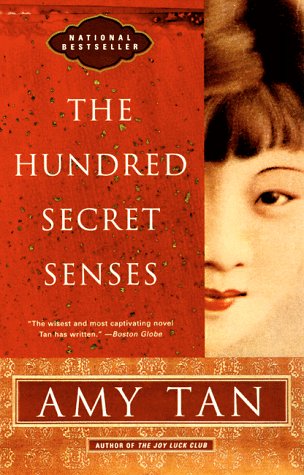
I just finished The Hundred Secret Senses, which is now one of my favorite Amy Tan novels, rivaled only by The Bonesetter's Daughter. Yes, I love The Joy Luck Club, The Kitchen God's Wife and Saving Fish From Drowning - I love any Tan story I come across - but The Hundred Secret Senses (along with The Bonesetter's Daughter) really stands out.

Olivia, the narrator, is the American-born daughter of a Chinese man and an American woman. When her father is on his deathbed, he reveals to his wife that he left behind a daughter in China and asks her to retrieve and raise her. Enter Kwan, Olivia's older half-sister who believes that she has "yin eyes" and can see and speak to ghosts.

Olivia struggles her whole life to ignore and dismiss Kwan's superstitions until her marriage is crumbling and she, her estranged husband and her sister find themselves on a trip to China together. The ending is extremely poignant and bittersweet without being unrealistic. Tan plumbs the depths of issues like life and death, reincarnation, history, soul ties, relationships and culture in this story, and I just ate it up.


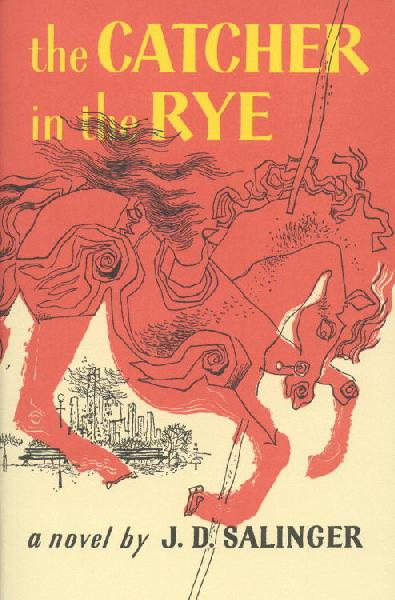
I'm also rereading The Catcher in the Rye for some volunteer work I do at the library. Is it just me, or does that novel get better every time you read it? Maybe I am just getting older and smarter, and can actually see the genius in the handiwork instead of loving it because Holden curses (which is why I loved it when I first read it in high school). Okay, that's not entirely true, but it was certainly part of it - going from reading authors like Dickens and Shakespeare to J.D. Salinger, someone whose work is dated for a child of the 80s and 90s but just as timeless as those other masters, was a breath of fresh air. Holden cursed, he thought most of the adults around him were morons, and he struggled with not fitting in and not being understood. He made me love him from the very first reading.

Now that I am older, there is only more to love - Holden's concern for protecting the innocence of children, his mourning for the loss of his own innocence, his struggle to understand a complicated and "phoney" world. When I first read Catcher, Holden was my peer - now, he is a child to my adult. It is strange to view a character from such a shifting lens. Yet I have a feeling I will still be reading Catcher when I'm 80, and I will still be finding new layers to love.

Sunday, November 2, 2008

TSS Week 21


The Book of Lost Things reminded me of two stories I have encountered before: The Chronicles of Narnia and the film "Pan's Labyrinth." In reality, it is quite different than both, but there are strong commonalities:

  • a child escaping from his early 20th century war-torn world into a fantasy land

  • the fantasy land experiences all have deep philosophical meaning
I enjoyed Narnia (though I haven't finished it) and I enjoyed Pan's Labyrinth - likewise, I enjoyed The Book of Lost Things. I don't think it deserves all of the hype it has gotten, but it was a good read.

The book starts with an introduction to David, a 12-year-old English boy. In the first few chapters, his mother dies of an illness. Strangely enough, this remains my favorite part of the entire novel because of the way Connolly tackles the monster that is grief with the simplicity in which it presents itself to children.

Beyond that, David - a bookworm we can all love - finds himself losing touch with reality and delving into books, which eventually leads into this new fantasy world. Grimm's fairy tales have been culled for material, and Connolly's retellings are done well. In the same vein, the novel is quite dark... it is not a children's story. I found it to be a worthwhile statement on coming of age, loss and morality.

Sunday, October 19, 2008

TSS Week 20


I finally finished Frankenstein. It is a tragic story and though the monster is supposedly the villain, I found him very sympathetic (more so than Dr. Frankenstein). The plight of the outcast and how it drives them to do evil things made me think of those kids who are relentlessly teased until they shoot people in their schools. Not that the violent acts are justified, but that they are realistic consequences of human isolation and rejection. I wonder if this was part of Shelley's point, that crimes and the people who commit them should not be viewed in a black and white fashion.

I also found it interesting how Dr. Frankenstein and the monster came to depend on each other, even in enmity. After all, when the Dr. is hunting the monster down and becomes weary, the monster leaves food for him to keep him going. Perhaps it was a desperate need for any kind of interaction, especially with his creator, but it intrigued me.

Also, as if you have been waiting with baited breath (hee hee), my review of Blue Genes has been published in Estella's Revenge.

Sunday, October 12, 2008

TSS Week 19


I finished Harry Potter and the Deathly Hallows last night. What a ride. I do feel that sorrow that comes with the end of a favorite series. In fact, it just reinforced for me (as a writer) how gifted writers are when they can make you care about their characters. Really care. As in, these characters are friends of yours that you think about long after the books are over. J.K. Rowling has written a Lord of the Rings for my generation. The series is definitely a classic, to my mind.

Here come the spoilers, so please don't read if you don't want the book... you know, spoiled.

*
*
*
*
*
*
*

I can't tell you how happy I was/am that Snape was vindicated. I knew I loved him for a reason.

Part that made me cry: When Percy returns to the Weasleys.

I particularly like Stephen King's review of the final book and the series in general.

Sunday, September 28, 2008

TSS Week 18

This week I am still working on Harry Potter and the Deathly Hallows. It is an audiobook on 17 CDs and I just began the 6th one. Part of me is dying to get right through it and find out what happens, but the other part of me wants to take it slow because I will miss this series.

I read more than half of Wide Sargasso Sea in the last week or two. A friend recommended it after Jane Eyre, and it is on the 1,001 Books to Read Before You Die list. It just wasn't doing it for me, though, and I finally put it to rest.

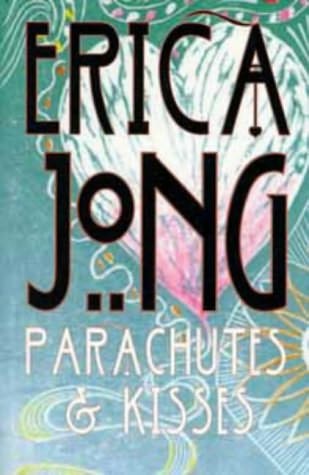
I'm also still reading Parachutes and Kisses, which is very good. I'm reading it so slowly because of the 300+ page book curse that is on me. The length makes me lose interest - not enough to drop it, but enough to take forever to read it. That wouldn't be a problem except I am forgetting and mixing up all of the protagonist's lovers.

Finally, I am reading Frankenstein for the first time through DailyLit emails. Boy, is it good! It seems to be a commentary on the danger of scientific advancement, which today makes me think of the danger of continual technological advances. I'm not anti-technology - in fact, I love it - but it's hard not to look at this character who overreaches, thinking that it is all he ever wants in the world, and lives to regret it. Makes you wonder.

Sunday, September 14, 2008

TSS Week 17

This week, I have been totally captivated by a memoir I am reviewing for Estella's Revenge. It's called Blue Genes by Christopher Lukas. It delves into his family's history of mood disorders, focusing specifically on his mother's suicide when he and his brother Tony were children and then again on Tony's suicide as an adult. I don't want to say too much about it because I do have to write that review, but I just love it. (And isn't that a great title, to boot?)


Aside from that, I am working on Harry Potter and the Deathly Hallows. I'm also really enjoying that (naturally :) but am very sorry to see the series end. This is one of those powerful series that rarely comes around. Personally, I am not ashamed to love books that are trendy. For example, Dan Brown's novels - I know a lot of people who wouldn't touch them with a ten foot pole, but I really enjoyed them. (Okay, there are tons of glaring flaws in writing and plot, but I couldn't put them down, and that says something.) Also, on another note, the Harry Potter audiobooks read by Jim Dale are fantastic. I'm hoping he's recorded Lord of the Rings because his accent and sheer talent are sounds for this American's sore ears.

I'm also still working on Pride and Prejudice. It is slow reading because it's coming in daily e-mail installments. I'm just not blown away. I'm not even all that interested in what will happen next. It has really become an issue of I'm almost done and I want to be able to finally say I've read this, but I won't ever read it again. Oh well.

Sunday, September 7, 2008

TSS Week 16

This installment is spoiler-ific because I finished Harry Potter and the Half-Blood Prince today. If you have not yet read this book (or Lord of the Rings: The Two Towers), stop reading this post and go away. It's for your own good. In fact, I will put some lines below for good measure.

***
***
***
***
***

J.K. Rowling keeps surprising me, which is clearly one of the reasons she is so popular. But honestly, Dumbledore's murder knocked the wind out of me. I couldn't believe it, and I was sure he was going to pull a Gandalf and return at some point. Well, he didn't, at least not in this novel. I don't know what happens in the next and final installment of the series. I have been thinking about Dumbledore all weekend, in disbelief. Wow. And I probably shouldn't admit to this, but I was kind of a Snape fan (I think because Alan Rickman is so good). I know that he is mean to Harry and all, but I preferred to think of him as misunderstood, especially after the revelation about how Harry's father James really treated him. I was so hoping he was on the right side. (He might still be, under the imperious curse or something, but that feels like a stretch.) Sigh. Book 7, here I come. (This is the first time I'm reading it, so no spoiler comments, please :)


Other than that, I am still reading Pride and Prejudice. It is okay. I know that is literary blasphemy, but eh. I'm enjoying it enough to continue but it is not living up to the hype for me.

On a side note, does anyone else find Mr. Bennet absolutely hysterical? Best character in the book, I would say, however minor.

Sunday, August 17, 2008

TSS Week 15

I may not do it every week but I love these Sunday Salon postings :)

I am still reading most of the books I previously blogged about, but I have also started new ones. Last week I read American Born Chinese because a friend lent it to me. It was a quick read, being a graphic novel, and I thought it was fabulous. It had three different narratives that came together as one at the end, all focusing on either Chinese culture or the Chinese-American experience. I thought Gene Yang presented the plight of the "Other" very well.


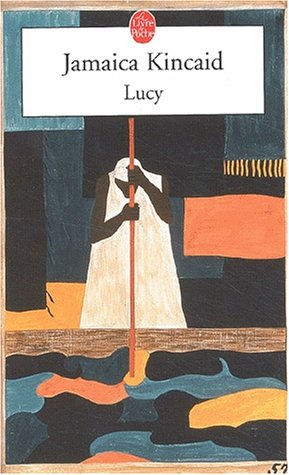
I also reread Lucy this past week, a short novel by Jamaica Kincaid about a West Indian au pair in New York City. In only 164 pages, Kincaid takes you inside the mind of one of the most complex literary characters of all time. She uses Lucy, her protagonist, to shine a light on colonialism and its effects, woman's place in the world and its effects, mother-daughter relationships, friendships and more. I loved this book when I first read it four years ago, and I still do.


Finally, I am rereading Prozac Nation. Again, I loved this memoir when I first read it years ago. I am enjoying it again now though I am certain that it could have been shorter had Wurtzel been less repetitive. That is starting to annoy me, to be honest, so I have been putting it down for some time and picking it back up.

Sunday, August 3, 2008

TSS Week 14


The friend who turned me on to Jane Eyre in the first place has had me over to her place several times for a viewing of the BBC version. It is great - Timothy Dalton is so Mr. Rochester.

Anyway, on to what I am reading. I started the copy of Erica Jong's Parachutes and Kisses that I picked up from the local bookstore for a dollar. I admit that I have not yet read Fear of Flying or How to Save Your Own Life, the two previous titles in the series, but I am enjoying it nonetheless. It is about 400 pages long and I have only read 70, so it is hard to predict if the plot will be pleasing to me, but the writing and the characters have been enjoyable so far. Isadora Wing, the protagonist, is a famous author who is dealing with her painful third divorce by drowning her sorrows in exploits with younger men. Jong's writing is fun for us analytical types because there are tons of passing references and allusions to classic literature, religion and popular culture. It makes you feel like part of the 'in group' to pick up on them.


I am also reading E.M. Forster's A Room with a View. I enjoyed Where Angels Fear to Tread and have been wanting to read A Room with a View since my visit to Florence years ago. It was slow for a while but now, in the second half, I am started to get interested in what might happen. In a nutshell: Lucy, the young beauty in the story, allowed a young man of lower social standing to kiss her while vacationing in Florence (simple kiss = big no-no back then). She is now back in England and engaged, yet the young man and his father have made a return appearance. Will this youthful indiscretion ruin Lucy's future happiness? (It's like a soap opera. Tune in next week to find out.)


Finally, I started my first ever reading of Pride and Prejudice. Most people would balk at this since my formal training is in literature, but no, I have not yet read the novel. It is pleasant so far - I didn't expect it to be as humorous as it is at times. Not much has happened so far except Mr. Darcy seems to have multiple personality disorder and Jane is very sick at Mr. Bingley's house. The feminist in me wants to kill Mrs. Bennet for being happy about this, just so that her daughter can spend more time at the wealthy bachelor's pad.

Sunday, July 27, 2008

TSS Week 13


I was mercilessly teased by a colleague for this, but I loved Jane Eyre. I thought it was really beautiful. Yes, it was romantic and that turns off some people, but I like a good romance every now and then, especially when it is done so well as this. Besides, the novel also addressed issues of faith and religion, social and economic class divisions and conscience. Not only that, but Jane and Mr. Rochester are such finely drawn characters. Everyone else, while necessary to the plot, is utterly peripheral when you recognize the power of these two individuals in personality, passion and conviction.


This past week I started reading Elisabeth Kübler-Ross's On Life After Death. I wanted something to answer my nagging question of "Where has my loved one gone?" This book answers that question. Of course, it only contains one of many theories about this, and I am not sure how much I believe and how much I do not, but it is a nice read anyway. Dr. Ross references many patients that she had who came back to life after having been dead, as well as experiences with "ghosts" (for lack of a better term; certainly not one she uses, though) who return with messages and comfort. Again, I am highly skeptical but sometimes you just want to tell yourself that something is true to erase the uncertainty.


Finally, I am reading Tartuffe for the first time through DailyLit emails. I am a big fan of that website and service! The play is good so far. Not much to say as I have only read a few scenes, but it has captured my interest.

Sunday, July 13, 2008

TSS Week 12

Only Human has been on the bookshelf for years. I bought it for about a buck at a used bookstore and just never got around to it. On a whim, I started reading it last week and breezed right through it.

I am a fan of biblical historical fiction that is written from a humanistic or secular perspective. In fact, I bought this novel because it reminded me of The Red Tent, one of my all-time favorites. Only Human focuses on the story of Abram and Sarai, more popularly known as Abraham and Sarah from the Old Testament. The author, Jenny Diski, alternates between an unnamed 3rd person omniscient narrator to God's first person narration. God is an interesting character and, to tell you the truth, not all that likeable. In portraying him this way, Diski flipped the story on its head, which is part of what I loved about Diamant's retelling of a biblical story.

My copy is available on BookMooch if anyone is interested in having it.


I have been reading Jane Eyre through DailyLit emails for months now, but I am finally towards
the end. I see that my friend who continually raves about the novel was completely right. I am in love. I will write more when I finish it!


Finally, I have begun William S. Buck's translation of The Ramayana. Ever since reading his fantastic translation of The Mahabharata for a literature course, I have been wanting to read this one. Though I am currently reading several books, I decided while I was at the library that if it was on the shelf, in stock, it would be a sign that I was meant to read it. The computer said it was but it was not in its place. After scouring all of the return carts, I found it. Does that still count as fate telling me to read it? :)

Sunday, June 15, 2008

TSS Week 11

I fell in love with The Accidental in the beginning. It is narrated by five different characters, and the first - Astrid, a 12 year old girl - totally captivated me. I loved her instantly and was hooked. The next, her 17 year old brother Magnus, was also done extremely well. The adults, however, were not as interesting. I found myself going through their parts just to get to the kids again.

The first half of the plot was intriguing, but after that, it just fell. Smith lost the magic and seemed to get away with no real resolution or ending at all. This disappointed me because it had such potential, and I had such high hopes. Kudos to her for creating a couple of fantastic characters, though.


I also just finished I, Lucifer, a novel I have been wanting to read since I saw it in a bookstore years ago. The cover says, "Finally, the other side of the story," which piqued my interest. I am well-versed in the Bible and Judeo-Christian traditions, and I love when people take a familiar story and redo it (The Red Tent is an all-time favorite). Anyway, this novel turned out to be less about Satan's retelling of cosmic history and more of an illuminating portrait of Satan himself. Who is he, what motivates him, is he really so bad? These are questions the reader finds her/himself asking. Duncan does a fabulous job of humanizing Satan without being unrealistic - every so often he reminds you that you cannot really believe a word he says. You learn to analyze Satan intuitively, without trusting his opinions of himself. The ending was perfect, fitting and satisfying. I loved it.